My very first grow light was pinkish-purple. Just thinking about that sight still hurts my eyes. Thankfully, I haven’t had any nightmares about it! 🤣 Can you imagine the jokes from my neighbours? “I wonder what Nina is growing in there!” 😁
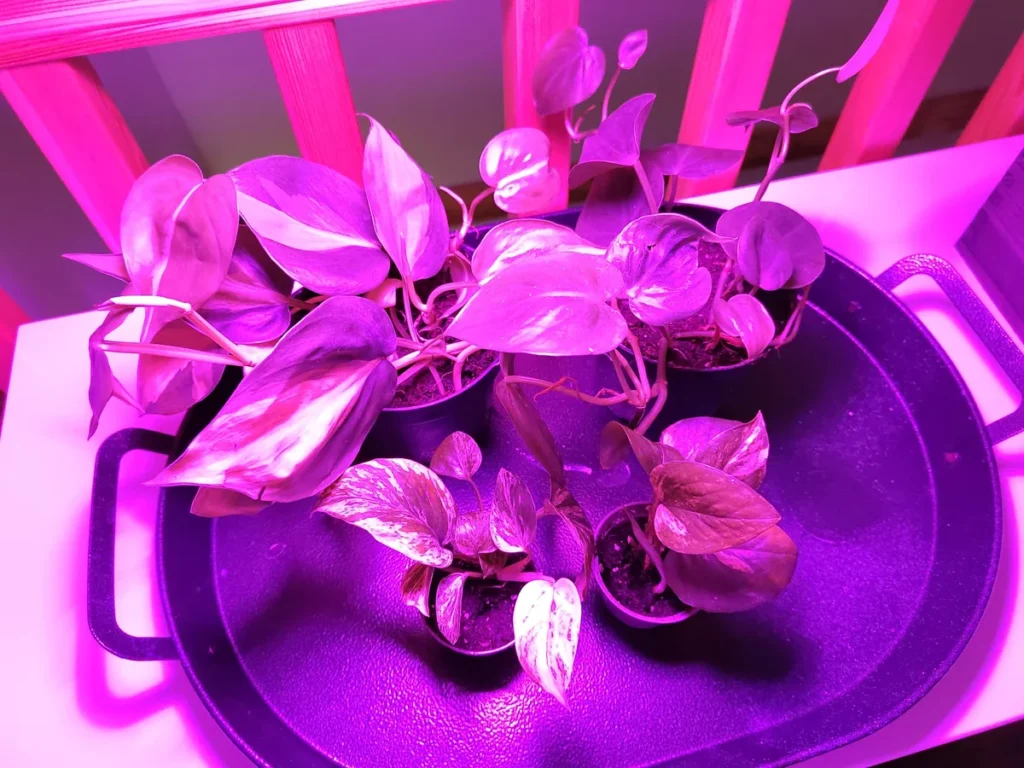
Back in 2021–2022, I learned from fellow plant enthusiasts on Facebook that checking a bulb’s Kelvin rating helps you choose the colour temperature of the light. The higher the Kelvin value, the cooler and bluer the white light generally looks. A lower value gives you a warmer, more yellowish light.
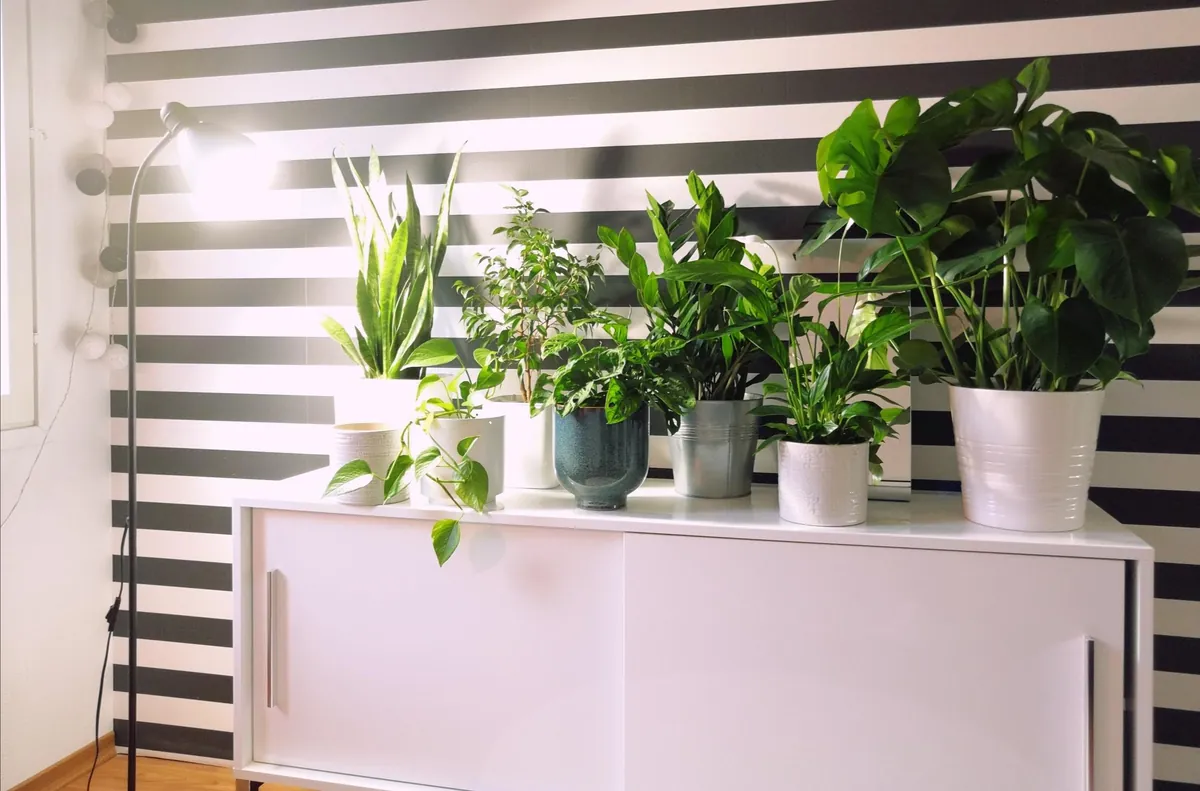
My first grow light bulbs went into ordinary desk lamps and table lamps. Nothing fancy, but we all have to start somewhere!
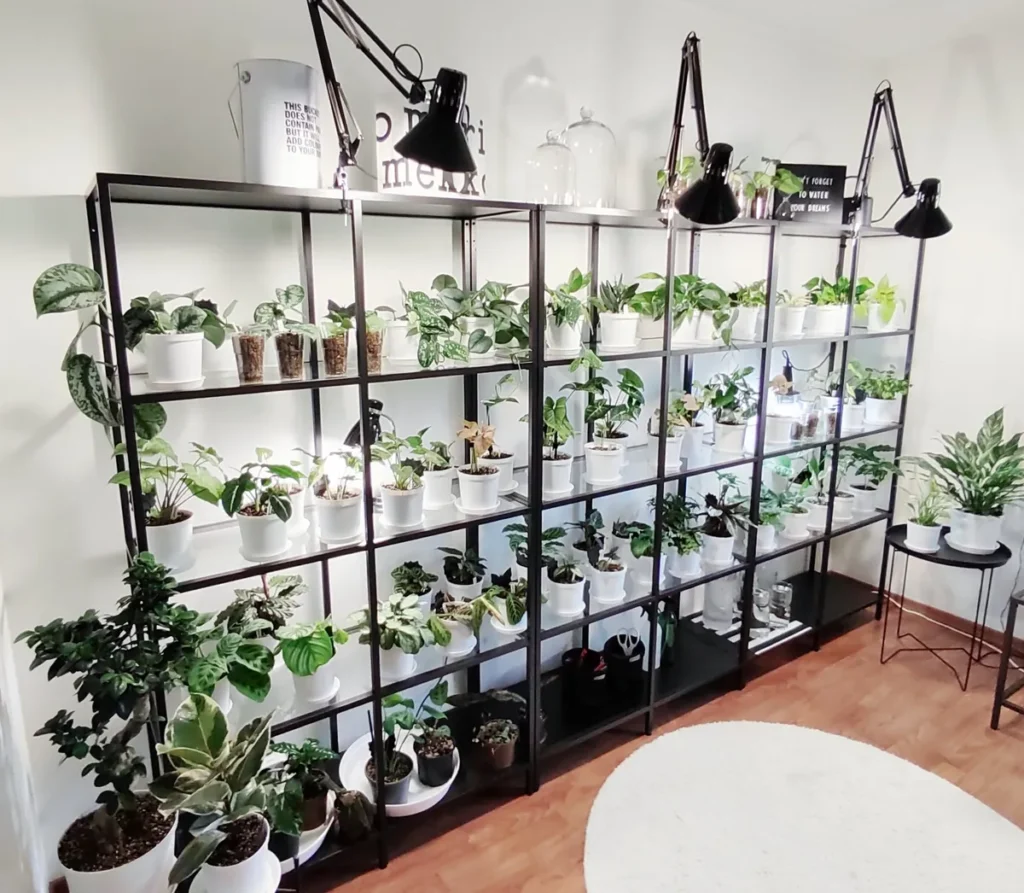
My green room needed A LOT of light
My green room faces north, with a relatively small window. And here in Finland, we have a rather limited amount of natural daylight for a large part of the year. If I wanted to give my plants good growing conditions, additional lighting wasn’t optional. I needed plenty of it!
I also invested in a humidifier, an Ufox HK2 evaporative humidifier, because apparently, one new plant-related obsession wasn’t enough 🤭
Meanwhile, my husband was trying to keep my enthusiasm in check, worrying about our electricity bills. He had his reasons… I had hundreds of plants to keep happy. We had slightly different priorities! 😂
The LED shelf lights that changed everything
A huge visual improvement came when I received LED grow light strips from Nelson Garden through a collaboration. I installed them on one shelf row of my plant shelving unit, and WOW. I was sold! And so were my plants 🤩
Then I bought the second row myself, and later Nelson Garden kindly sent me more strips on a couple of occasions. Since then, my shelving unit has been illuminated by twelve 85 cm LED strips.
The difference was fantastic. The lighting looked neat and uniform, and I no longer had to rely on a collection of random lamps to keep my shelf plants happy.
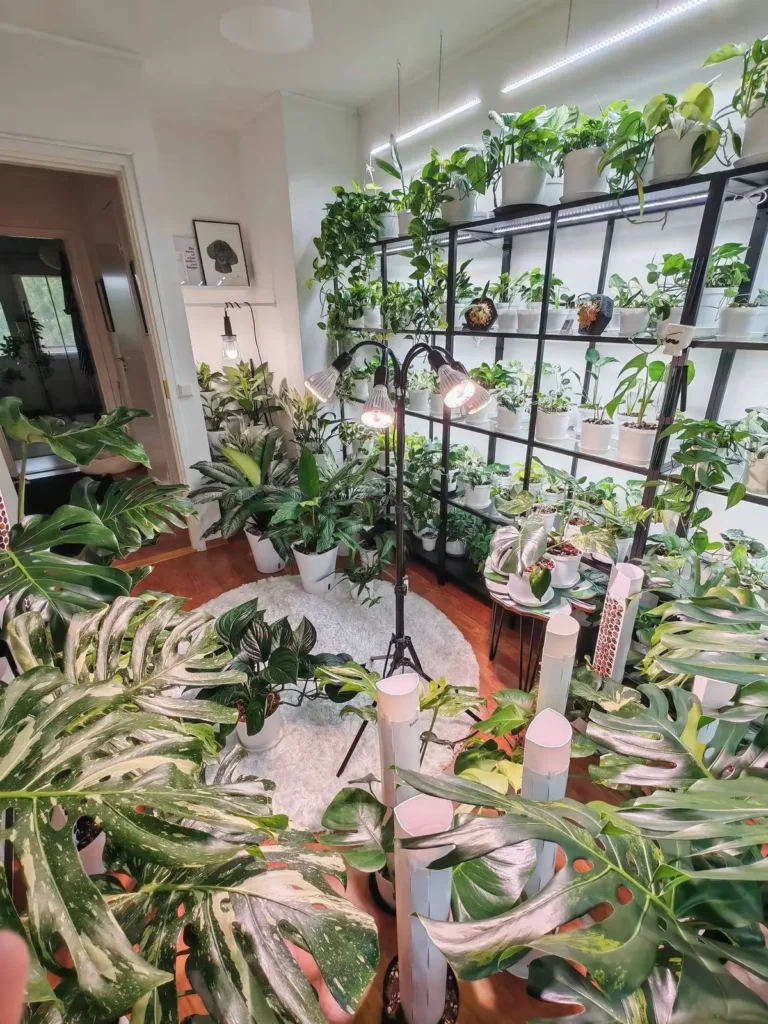
Of course, the plants outside the shelving unit still needed light. Over the years, I’ve tried all sorts of solutions, from grow light bulbs in floor lamps to lights attached to rubber hand lamps.
Let’s also remember that this was the era when I was shopping for plants several times a week and “saving money” on other things. Being on a disability pension doesn’t exactly leave you with an unlimited plant budget, so I had to get creative! 🤭
Discovering those gorgeous vertical grow lights
As moss poles gradually took over my green room, I became fascinated by the tall, column-shaped grow lights I kept seeing on Instagram.
Eventually, I found lights that I could order to Finland. Oh, that sleek design! 😍
But what I loved most was how the plants responded. Their leaves positioned themselves beautifully towards the light, making the whole setup look like a carefully choreographed green jungle.
Sadly, the story of those lights came to an abrupt end when I received an email from Amazon informing me that the products had to be taken out of use and returned because of a safety risk. And just like that, my beautiful lighting setup became history. You win some, you lose some!
Enter SANSI 🌱
I first discovered SANSI through their handy clip-on grow lights, which I ordered for the hanging shelves in front of my living room windows.
The windows face south and are relatively large, but there’s a balcony directly above them that blocks a significant amount of sunlight. That’s why the grow lights on those shelves stay on all year round.
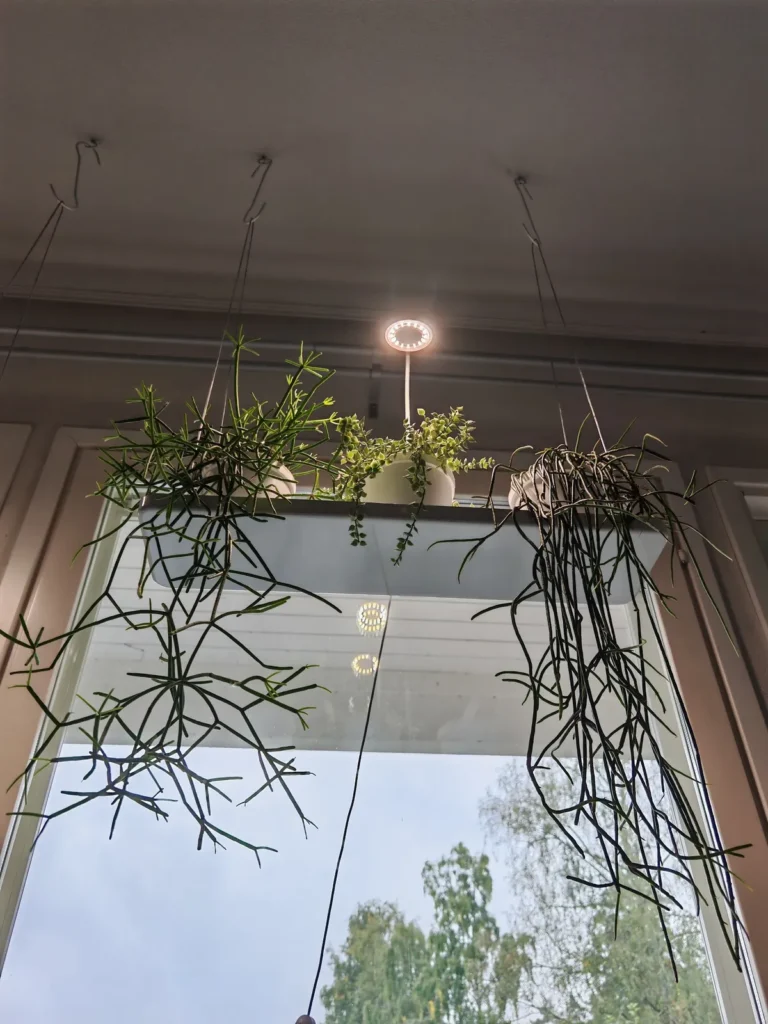
When I shared a post about my lighting setup on Instagram, SANSI noticed me and my account and reached out to suggest a collaboration.
Well, YES PLEASE! 🙏🏻
Through our collaboration, I received a SANSI Multi-head Grow Light with an adjustable tripod stand for the plants on the floor of my green room 🤩
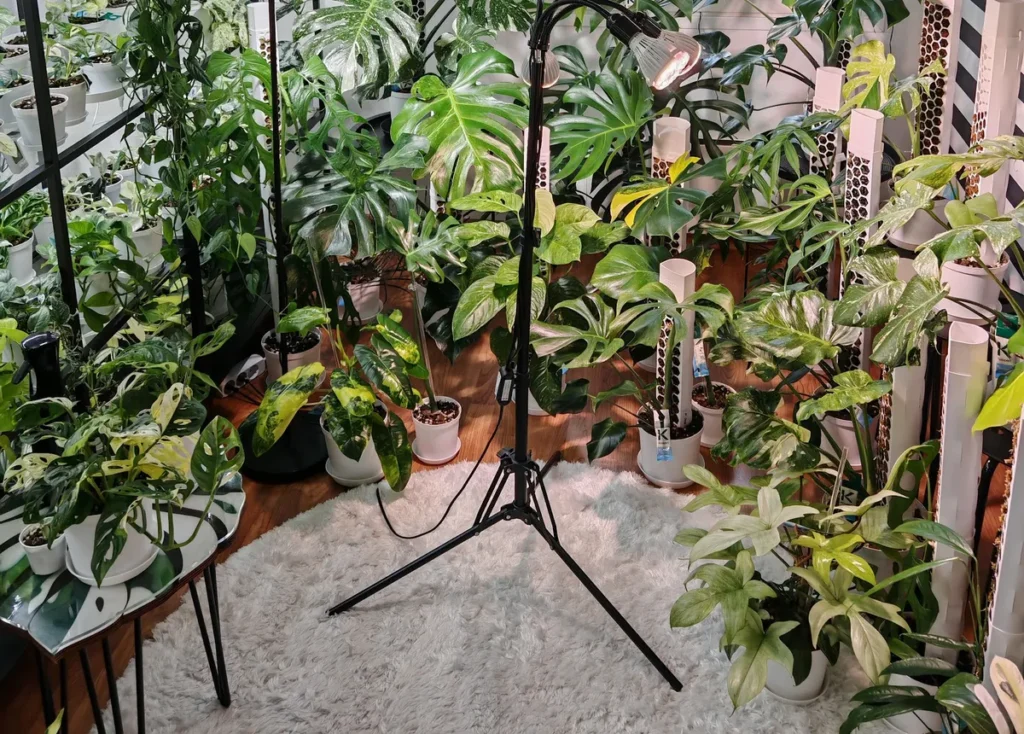
The 120W power rating was a source of horror for hubby and pure delight for my Monsteras. And there I was, caught somewhere between the two! 🤭
Jokes aside, I’ve been 100% happy with that light. It has been a fantastic addition to my green room.
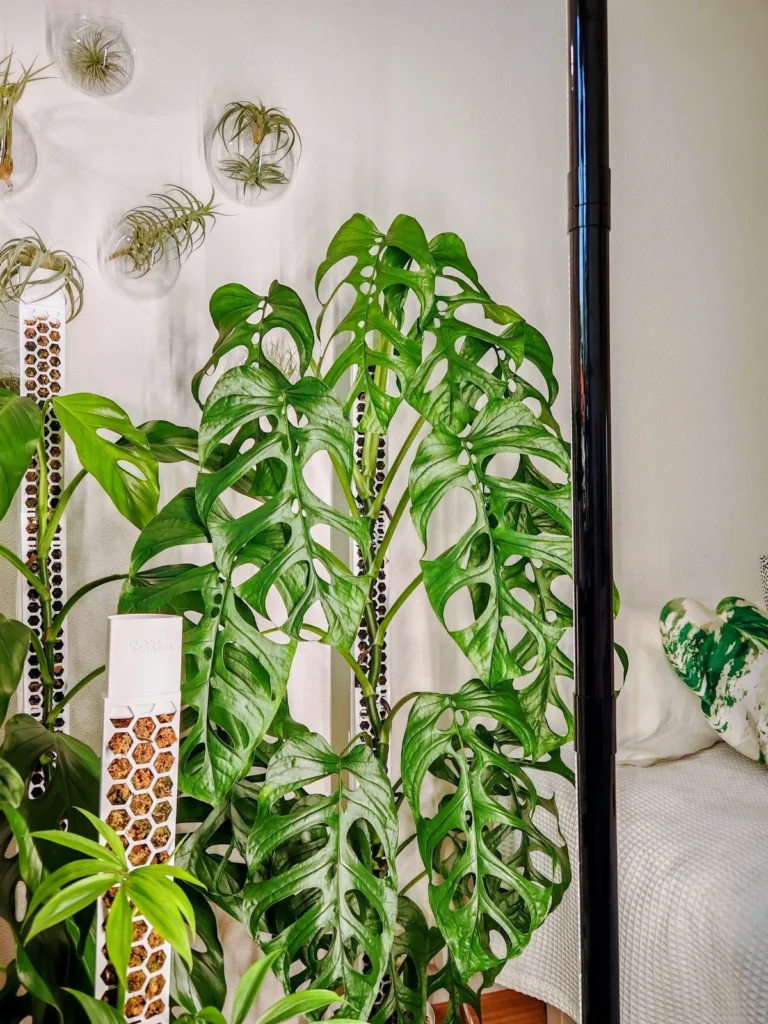
Later, SANSI sent me some of their newer products through another collaboration: their 55W vertical grow lights!
These are super convenient, with an easily adjustable height and even a remote control. Little details that make everyday plant care so much easier!
And here’s a little tip if you’re thinking of ordering from SANSI: remember to select the correct regional store for your location, whether that’s the EU, USA, Canada or UK.
You can use my code SNina for 30% off your whole SANSI order 🤗
I’ve been a SANSI fan for a long time, so joining their affiliate programme felt like a natural next step. I get to share products I genuinely enjoy using, and you get a discount. A lovely little win-win!
Do my plants ever get a winter break?
Nope! My plants don’t have a traditional winter rest period because my grow lights allow many of them to keep growing throughout the year 🌿
Of course, growth still depends on the plant species, temperature, watering and overall growing conditions. But supplemental lighting makes a huge difference when natural daylight is limited.
One of my biggest challenges is finding the right balance between illuminating as many plants as possible and keeping the lights close enough to the foliage.
Why? Because light intensity decreases rapidly as the distance from the light source increases. Moving a lamp just a little farther away can make a surprisingly big difference to the amount of light reaching a leaf.
I want to cover as many plants as possible, but I also don’t want my lights hanging so far above them that they’re barely doing their job.
It’s an ongoing game of plant Tetris, with lighting as an extra level of difficulty 😂
What if you don’t use grow lights?
If you’re not using supplemental lighting, here’s one of my favourite practical tips:
Your plant should be able to “see” the sky from where it stands.
Imagine sitting in your plant’s position and looking towards the window. How much of the sky would you actually see?
The more open sky your plant can see, the better its chances of receiving useful natural light, although the direction of the window, the season, obstructions and the plant’s needs all matter too.
A spot just a few metres away from a window can already be surprisingly dark from a plant’s perspective, even if the room looks bright to us.
Our eyes are very good at adapting to different light levels, so a room that feels perfectly bright to a human may provide much less light than a plant needs for healthy growth.
Light is a plant’s real food 🌱
Here’s something worth remembering: we often talk about soil and fertiliser as plant food, but light is the energy source that powers photosynthesis.
Plants make their own sugars and carbohydrates through this process. They use energy from sunlight or suitable grow lights to convert carbon dioxide from the air and water absorbed through their roots into sugars.
Those sugars provide the energy and carbon compounds the plant needs to grow, maintain its tissues and build new leaves, stems and roots.
Without sufficient light, a plant may struggle to produce enough energy to sustain healthy growth, even if it’s sitting in excellent soil and receiving all the fertiliser it could possibly want.
So, where do soil and fertiliser fit into the picture?
Soil and fertiliser provide essential resources, not energy.
Nutrients such as nitrogen, phosphorus and potassium help plants build new tissues, develop roots and maintain their essential functions. Think of them as the building materials and supporting nutrients that allow the plant to put its light-powered energy to good use.
You can provide the best soil mix and fertiliser in the world, but they can’t compensate for a serious lack of light.
In other words, before reaching for another bottle of fertiliser, take a good look at your lighting situation. Your plant might not be hungry for nutrients at all. It might simply need more light! 😉
How long do I keep my grow lights on?
All my grow lights are currently set on timers for 10 hours a day.
That’s a little less than the 12–14 hours often used for supplemental lighting, but I’m trying to balance good growing conditions with electricity consumption. Remember hubby and those electricity bills? He’s still around! 🤭 (And I love him so very much 💖)
The ideal lighting duration depends on the plant species, light intensity, natural daylight and the total amount of light the plant receives throughout the day. More hours aren’t automatically better, especially if the light is already very intense.
For my own collection, ten hours is the compromise I’ve settled on.
Maybe I’ll write a separate post one day about direct light, indirect light, shade, PPFD, full-spectrum lighting and all those other terms that can make grow lights feel like a science project 🤓🌿
A little warning from someone who has learned the hard way 🫣
Before I wrap up my grow light memories, I have to confess something.
The summer before last, I moved my cacti out onto the terrace for their summer holiday. Unfortunately, I forgot to open the parasol that would have allowed them to acclimatise to the stronger sunlight gradually.
The result? Some seriously ugly sunburn marks on several of them.
And yes, I’ve made the same mistake with Ficus plants in the past when moving them out onto the balcony.
What was I thinking? Apparently, not very much! 😂 I blame menopause and brain fog 🫣
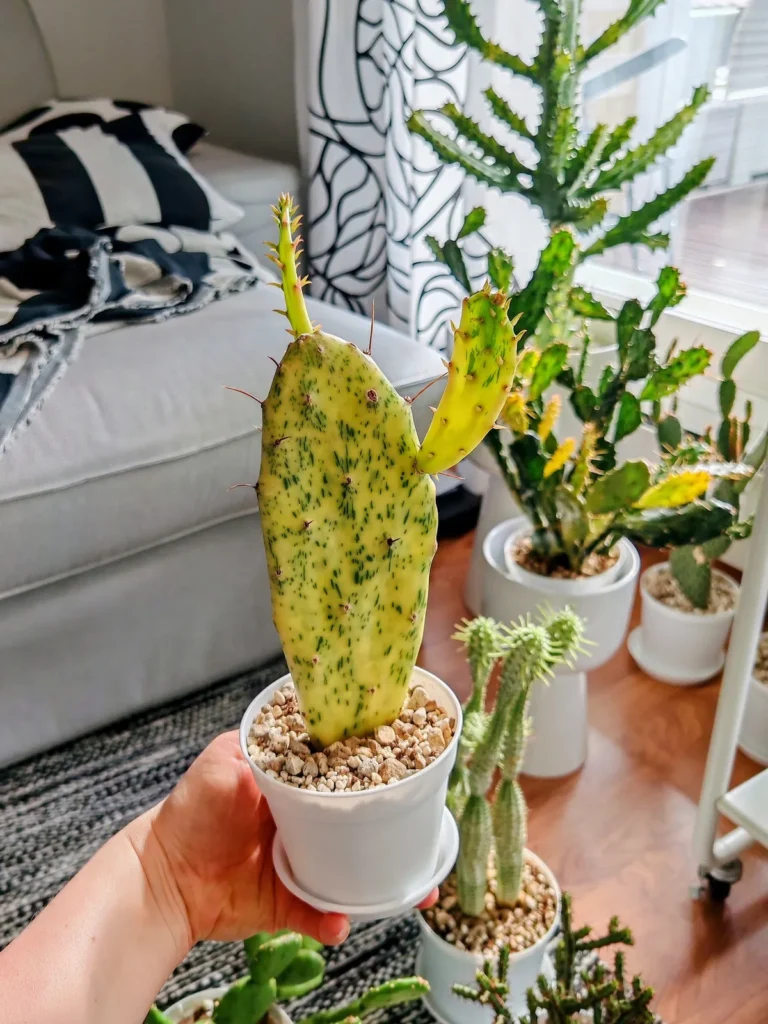
Even though many cacti grow naturally in places with intense sunshine, that doesn’t mean you can suddenly move a plant from indoor conditions straight into direct summer sun without consequences.
Plants need time to adjust to significantly stronger light. Gradually increasing their exposure helps them acclimatise and reduces the risk of leaf scorch or sunburn.
The same principle applies to many houseplants that have spent months indoors.
So, please learn from my mistakes and introduce your plants to outdoor sunshine gradually. Your leaves will thank you! If a parasol or something similar is not an option, you can use a bedsheet or a tablecloth, for instance—anything to create a bit of shade.
My intentions have always been good. My execution, on the other hand, occasionally needs a little supervision 🤣
And that, my friends, is a little piece of my journey through the wonderful world of grow lights. From eye-watering pink-purple bulbs to a fully equipped green jungle, I’ve learned a lot along the way.
And I’m still learning. That’s one of the best things about being a plant enthusiast. There’s always something new to discover, experiment with or accidentally set on fire with the sun. (Please don’t do the last one!)
Disclosure: Some of the grow lights mentioned in this post were received through collaborations. I’m also an affiliate partner of SANSI. If you shop using my code SNina, you’ll receive 30% off, and I may earn a commission from your purchase 💚